
Backlinks are one of the strongest signals search engines use to understand a website’s credibility and authority. When other sites link to your pages, they send trust signals to Google, helping your rankings grow. This is why understanding the types of backlinks is essential for any business or marketer looking to improve online visibility.
Backlinks do more than just bring traffic; they strengthen your reputation, improve indexing, and act as a foundation for long-term SEO success. But not all backlinks are equal, and knowing which ones help and which ones harm is a crucial step in building a strong digital presence. In this blog, we’ll break down every major category of backlinks, explain how they work, and show you how to build a backlink profile that boosts ranking instead of risking penalties.
Backlinks act as trust votes from one site to another, helping search engines understand the reliability of your content. When high-authority sites point to your pages, Google sees this as a signal that your content is valuable and trustworthy. This is why website backlinks play such an important role in long-term SEO strategies.
Backlinks influence ranking potential, boost domain authority, and help Google discover your pages faster. They also improve referral traffic and ensure users reach your content from trustworthy sources. If you are confused about how many types of backlinks exist, you are not alone. The digital world offers a wide variety, each with different strengths, risks, and purposes.
SEO success depends on understanding the different categories of backlinks and how they influence ranking strength. Search engines do not treat every link the same. Some backlinks increase authority, while others can hurt your reputation. The types of backlinks in SEO include editorial, organic, directory, outreach-based, image-based, and many more. Each serves a different purpose depending on your website’s goals. Building SEO backlinks wisely can help your site improve its domain authority naturally over time.
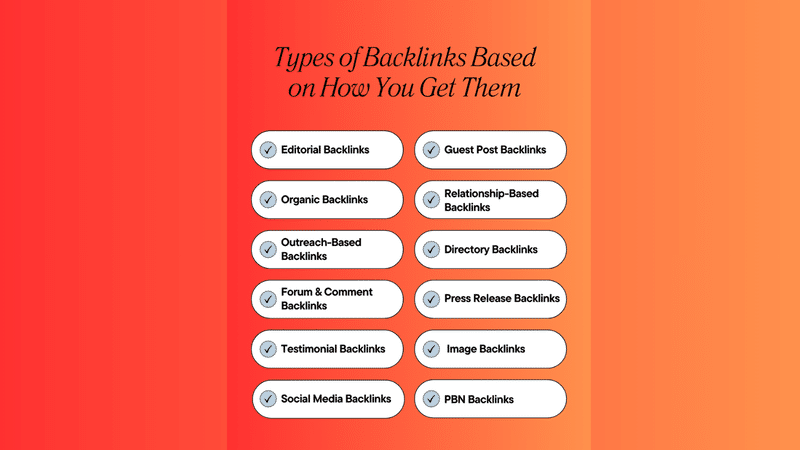
When planning a backlink strategy, it helps to understand the major categories of links based on how they are acquired. Some come naturally, while others require outreach, partnerships, or submissions. Knowing all types of backlinks helps you identify which ones offer the best types of backlinks for long-term SEO success.
A strong backlink strategy starts with clearly understanding all types of backlinks and why each one is created. Some backlinks are earned because your content attracts attention on its own, while others come from intentional actions like outreach, submissions, or partnerships. When you know the purpose and value behind each link type, you can choose the approaches that align best with your SEO goals and build a natural, trustworthy link profile.
It is common to get confused about “what are editorial backlinks?” Editorial backlinks come from high-quality content naturally linking to your pages. They usually appear when your site publishes valuable, trustworthy, and well-researched information. These are among the strongest link types because they happen without manipulation. When blogs, publications, or educational sites reference your expertise or data, you earn powerful authority signals.
Guest posting is one of the most reliable white-hat SEO strategies. You contribute content to another website in exchange for a backlink pointing to your own site. The backlink guest post method increases reach and credibility. Many companies also focus on guest posting for backlinks to build relationships with niche-relevant platforms.
Organic backlinks occur when websites link to you naturally without any outreach or request. This usually happens when your content is unique, valuable, and highly informative. Learning how to get organic backlinks involves focusing on content quality, originality, and solving real user problems. These links are highly trusted by Google and are always beneficial for rankings.
Out of all the types of backlinks, these backlinks come from networking and long-term partnerships. If you build strong relationships with bloggers, influencers, business partners, or industry experts, you can earn high-quality links from their sites. They work well for brands that engage often with their communities.
Outreach links are obtained by contacting website owners, editors, bloggers, or journalists with valuable suggestions. This includes pitching content for inclusion in blogs, roundups, or link pages. Using backlink outreach is essential for scalable link-building. Many marketers also implement email outreach for backlinks as part of their long-term SEO plans.
Directory submissions help websites gain visibility through structured listings. Although less powerful today, they still contribute value when used selectively. Using article directories for backlinks works best for niche industries. Meanwhile, backlink directory submission allows your business information to appear across trusted platforms.
Forum posting and blog commenting can be safe backlink methods when used with care and real value. Instead of dropping random links, the goal of comment backlinks should be to add useful input to real discussions. Knowing how to create comment backlinks properly means choosing relevant blogs, using real profiles, and writing thoughtful responses.
A well-placed backlink blog comment on a trusted site can send steady referral traffic and improve comment backlinks SEO value over time. Some platforms allow dofollow blog comments backlinks, but these should be used sparingly. Most importantly, commenting on blogs for backlinks should always focus on contribution first and promotion second.
Press releases help businesses spread news about updates, launches, or announcements. When picked up by trusted media sites, they generate powerful backlinks and visibility. However, only high-quality PR distribution channels should be used.
Many companies feature testimonials from users who have tried their services. When you share a review that gets featured, you often receive a backlink in return. This is a simple and effective way to gain authority links from real businesses.
Image-based backlinks occur when websites use your graphics, infographics, or photographs and credit you with a link. This is why image backlinks are powerful for designers and content creators. When sites reference visuals, they send authority through backlinks image sources. Many SEO experts also use seo backlinks images to drive organic traffic through descriptive alt text and metadata.
Social platforms provide visibility and referral traffic. While many debate do social media links count as backlinks, they certainly help with indexing and engagement. When people share your content, they generate social media backlinks SEO value. Leveraging social media for backlinks encourages natural link building on a larger scale.
To understand the risks, it’s important to first know “what are PBN backlinks?” They come from a network of websites built mainly to manipulate search engine rankings rather than provide real value to users. Some marketers experiment with how to create PBN backlinks by using expired domains and repurposed content, but this approach directly violates Google’s guidelines.
While seo pbn backlinks may show short-term ranking improvements, they often lead to severe penalties, traffic drops, or even de-indexing. Many spam networks also sell PBN blog post backlinks, but these are highly unstable and can damage your website’s long-term SEO credibility.
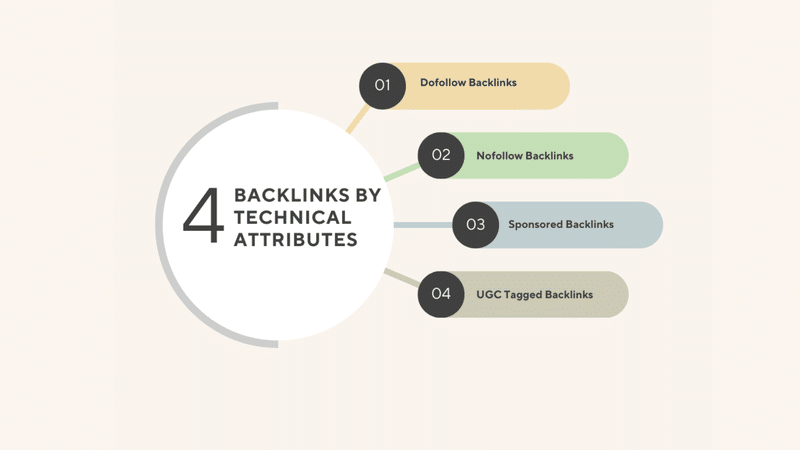
Backlinks are not judged only by where they come from, but also by how search engines interpret them. These technical attributes determine whether a link passes ranking power, limits SEO value, or simply helps with visibility and traffic. Understanding these differences allows you to build a balanced backlink profile that supports both authority growth and natural search performance without risking penalties.
Dofollow links allow search engines to pass authority and link juice from one site to another. They are the strongest form of backlinking and directly impact rankings. Many marketers research how to create dofollow backlinks for better authority. Websites that allow linking may be listed in dofollow backlink websites collections. Inspecting your backlink profile list dofollow entries helps track growth.
Beginners must learn how to find dofollow backlinks to identify strong placements. Understanding what is dofollow backlinks is key when exploring different types of dofollow backlinks for your strategy.
Nofollow links don’t directly transmit ranking authority but still offer benefits. They bring traffic, improve brand awareness, and support natural backlink profiles. Learning how to create nofollow backlinks ensures balance. Understanding what is nofollow backlink helps beginners know when to use them. While some marketers fear them, knowing how to remove nofollow backlinks helps in rare cases. These links also contribute to nofollow backlinks SEO signals.
These links are tagged to show they were paid for, helping Google differentiate between organic and promotional content. Sponsored backlinks must be labeled correctly to avoid penalties.
User-Generated Content (UGC) backlinks appear in comments, forums, or community-based posts. They signal that the link comes from a user rather than the site owner. These are useful for diversification.
Apart from basic and technical categories, some special backlink types contribute unique ranking power. These help shape a strong and diverse backlink profile.
Contextual backlinks are links that appear inside the main body of relevant content, not in footers, sidebars, or author bios. These links carry strong SEO value because they are surrounded by related information, which helps search engines clearly understand their relevance. If you are wondering what is contextual backlinks, think of them as editorial-style links that fit naturally into a paragraph.
To learn how to create contextual backlinks, focus on publishing expert-level content, contributing in-depth guest posts, and earning placements through digital PR. For those asking how to get contextual backlinks, the most reliable methods are link-worthy content, authority collaborations, and niche-relevant outreach rather than mass link building.
Unlinked brand mentions happen when your business, product, or website is mentioned online without a clickable link. These mentions already show that the publisher recognizes your brand, which makes them one of the easiest backlink opportunities to convert.
Instead of starting from scratch, you simply reach out to the website owner, show them where you were mentioned, and politely request proper link attribution. This method saves time, has a high success rate, and helps you earn natural backlinks without creating new content or running large outreach campaigns.
Resource page backlinks come from pages that curate useful tools, guides, and learning materials on a specific topic. These pages are designed to help users, which is why search engines trust them and often rank them well.
When your content is added to a relevant resource page, you gain a high-quality, contextually relevant backlink that can drive targeted traffic and improve domain authority. The best way to earn these links is by creating genuinely helpful content and reaching out to site owners with a clear explanation of how your page adds value to their users.
Not every backlink helps your website grow. Some links can actually damage your rankings and put your site at risk of penalties. Low-quality links from spam sites, link farms, irrelevant directories, or hacked pages are especially harmful. This is why it’s important to regularly review your backlink profile and learn how to find bad backlink sources before they impact your SEO performance.
If harmful links are already affecting your site, the next step is to understand how to disavow bad backlinks using Google’s Disavow Tool. This tells search engines to ignore toxic links that you cannot remove manually. In more serious cases, knowing how to get rid of bad backlinks through direct outreach to site owners or cleanup services can help restore trust and protect your long-term rankings.
Google regularly updates its algorithm to improve search quality and reduce manipulation, which means websites must be more careful than ever with their link-building efforts. The safest way to protect your rankings is to focus on earning seo backlinks through high-quality content, real relationships, and trusted sources instead of shortcuts.
Regularly auditing your backlink profile helps you spot sudden spikes, suspicious domains, or irrelevant links before they cause damage. It’s also important to keep your anchor text natural, diversify your link sources, and avoid automated link-building tools that can trigger penalties.
Backlinks continue to be one of the most powerful ranking factors in SEO, but true success comes from understanding the types of backlinks and how to use them correctly. Building links without knowing their type, quality, or impact can do more harm than good. A single high-quality contextual or editorial backlink from a trusted source can deliver more long-term value than dozens of weak, irrelevant links. Sustainable SEO growth depends on trust, relevance, and consistency, not shortcuts.
A strong backlink profile is built through quality content, smart outreach, and regular monitoring to remove harmful links before they affect performance. At Webdura, we make sure your strategy is aligned with search engine guidelines, and your website gains authority, stability, and long-term visibility across search results.
1. What are Tier 3 backlinks?
Tier 3 backlinks are low-authority links used to support higher-tier links rather than pointing directly to your main website. They help strengthen the overall link structure but carry very little SEO power on their own.
2. Which backlink is most powerful?
Editorial and contextual backlinks earned from trusted, high-authority websites are the most powerful. These links pass strong SEO value and increase your site’s credibility.
3. How can I improve my website ranking?
You can improve your ranking by creating high-quality content, earning strong backlinks, and maintaining good on-page and technical SEO. Consistency and user experience also play a major role in long-term growth.
4. Are nofollow backlinks useful?
Yes, nofollow backlinks help build a natural and balanced backlink profile. They also drive referral traffic and improve brand visibility across platforms.
5. How can I identify risky backlinks?
Risky backlinks usually come from spammy, irrelevant, or low-quality websites. Sudden spikes in links from unknown domains are also a major warning sign.
6. Do backlinks still matter after Google’s updates?
Yes, backlinks remain one of Google’s strongest ranking signals. However, quality and relevance matter far more than sheer volume now.


we love working alongside ambitious brands and people

Comments